
Justice Beyond the Badge
The OutlawsThis flow explores how compromised law enforcement forces characters to confront the difference between justice as principle and justice as an enforceable practice.
increasing Bearing strength in each event
 decreasing
Bearing strength in each eventdecreasingA Charge Without a Fair Hearing

A Charge Without a Fair Hearing
Authority Used Against Del
Sid Blackwell arrests Del for rape after Del refuses Ruby Prentiss. Because Blackwell’s father is the judge, Del sees little chance that the accusation will be assessed impartially.
Flight as a Verdict
Del runs before trial, choosing freedom over a legal process he believes is already compromised. The decision illustrates how distrust of justice can push an innocent person toward the very outlaw status feared by the law.
A Badge in the Marshal’s Hands
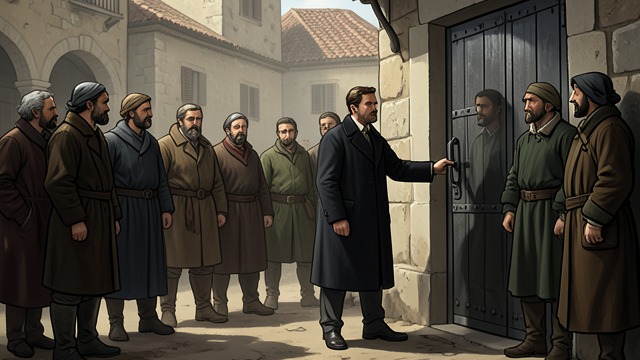
A Badge in the Marshal’s Hands
Law as Personal Force
Bull Hammer’s reputation rests on violence carried out under the authority of his badge. His killings and intimidation have made residents afraid to challenge him.
Order Without Justice
The marshal suppresses disorder but also exploits his office for private purposes. His presence makes clear that legal authority can be as dangerous as outlaw violence when it lacks accountability.
Holt’s Selective Enforcement

Holt’s Selective Enforcement
Law Used for Leverage
Windy Holt releases a man Del brought in for attacking Kate and instead arrests Del on a distant rape warrant. Holt expects a reward and values Landon’s approval more than the evidence before him.
Procedure as Threat
Del’s temporary imprisonment shows how official process can be weaponized. The jail does not protect Kate or establish truth; it gives a compromised sheriff another way to control a dangerous witness.
Bailey’s Limits
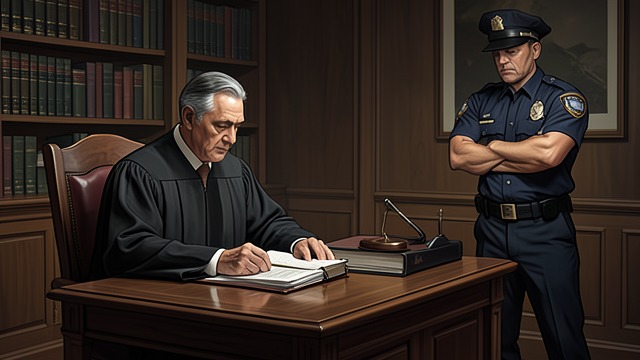
Bailey’s Limits
Law Without Enforcement
Judge Bailey explains that he can read the will and preside over a case but cannot make the sheriff enforce his rulings. Nor can he promise that a jury will resist Landon’s threats.
Justice as an Institution
Bailey’s predicament shows that a fair rule on paper is not enough. Justice depends on officials, witnesses, and citizens willing and able to uphold it.
Vigilante Necessity

Vigilante Necessity
Private Force Fills the Gap
Del and his companions confront Landon because the sheriff will not protect Kate or enforce her ownership. Their actions prevent further attacks but also bring lethal violence into the street.
An Uneasy Resolution
Landon’s death ends the immediate threat, yet it does not make private violence an ideal substitute for law. The story presents it as a response to institutional failure, one that carries irreversible costs.
The morning Sid Blackwell arrests Del
After Del strikes Bull Hammer in Baggs
During Del’s first day in the Roily jail
When Del asks whether Roily can protect Kate
At the final confrontation in Roily
